Monday, October 21, 2013

Canada

Oh, Canadian Music

Although it's pretty close to home, Canada's music is varied despite its strong influence from American culture. Other large musical influencers include France and Britain because of their histories with Canada.

When French settlers came to the country in the 17th century, they brought with them not only the language and customs of France, but also European instruments such as the flute and trumpet. In the 1700s, Canada was introduced to opera, and orchestral and chamber music also became popular. The music of European composers like Bach, Handel and Mozart was frequently played in concert halls.

At the start of the 20th Century, Canada began to see its musical culture expand with the creation of Canada's first record label, Compo Company, and its first radio stations, some of which were in French.

During the mid-century, jazz was the most popular musical form, and swing dancing followed suit. The first major mainstream band in Canada was The Royal Canadians, which received international recognition in the '20s.


After the second World War, Canadian bands began to sprout up all over the country, most of them being school bands and teen idols. Many Canadian artists ended up achieving success when thrust into the American music industry, but other musicians remained true to their Canadian roots.

In the '80s and '90s, musical genres expanded further in Canada, and the "youth culture" became ever-present. One of the most famous musicians to emerge from the country was French-Canadian singer Celine Dion, who quickly achieved international success.


Other mainstream Canadian artists to emerge in the United States include Michael Bublé, Alanis Morissette and Justin Bieber.

Diana Krall


Although Diana Krall has reached international fame for her musical talents like many other Canadian musicians, the British Columbia native stays true to the sultry jazz sounds of early 20th century Canada.

Other than her masterful piano playing, Krall is also quite recognized for her incredible contralto vocals. The singer has not only been named by Billboard as one of the greatest jazz musicians of her time, but she has also won two Grammy Awards and eight Juno Awards (the Canadian equivalent of a Grammy).

At age 48, Krall has release 11 studio albums and has sold over 15 million albums worldwide, making her one of the best-selling artists of today.

Monday, October 14, 2013

Russia

A Rock Revolution

Classical music has always been a large staple in Russian culture. In the 18th century, many famous Russian composers were influenced by Italian opera. One of the most popular and celebrated composers from this time period was Peter Ilyich Tchaikovsky, who was known for the famous ballets, The Nutcracker, Swan Lake and Sleeping Beauty.

The 20th century brought with it a new wave of music inspired by the Russian Revolution and then the Soviet Union. "Avant garde" music was popular in the beginning of the century, with a revolutionary spirit about it. Later, under the rule of Joseph Stalin, experimentation in music dwindled and classical structure was favored.

Throughout the century, Russian music expanded and introduced modern American forms of rock and pop music. Russian rock music hit its peak in the 1980s with popular musicians like Kino, Aria and DDT.

While pop music was prevalent in the 20th century, it didn't really become mainstream until the 2000s with one of Russia's most famous pop duos, t.a.T.u.

And again, since rock was the main staple in the '80s and '90s, other musical genres like alternative rock, punk rock and grunge weren't that prevalent until the 21st century. Most of this mainstream music is broadcasted to the public via MTV Russia and other national radio stations.

Since the collapse of the Soviet Union in the early '90s, the Russian music scene has taken part in increasing experimentation. A type of music called "Russian chanson" is specific to solely Russian culture, and it is basically about the daily struggles in life and the criminal world.


In contrast to America and many European countries, electronic and dance music are not very popular in Russia. The few electronic musicians who do exist remain pretty independent and under-promoted.

Dima Bilan (Дима Билан)

The Russian singer/songwriter is best know for having won the Eurovision song contest award in 2008 with the song "Believe."

At the mere age of 31, the successful musician has released six albums to date and has received 32 awards.

Having started releasing albums in 2003, Bilan began recording his first international music in English four years later with one of his singles featuring Nelly Furtado. By 2008, Bilan had plans to release the album in three languages--Russian, English and Spanish.

His first single from this new album, "Number One Fan," achieved international success and was picked up by Interscope Records, who wanted to release the English version in 81 different countries.

Along with his musical career, Bilan has also enjoyed success as an actor in a number of Russian films and television series.

Monday, October 7, 2013

Finland

Folk Lives On

Folk music in Finland consisted of an element called "runonlaulanta," which had a rhythmic, chanting sound. The musical form was revolutionary in Finland's early days of music and led to a similar, more melodic form of singing called "rekilaulu." Although the style dates all the way back to the 1600s, the 1920s pop musicians began to include hints of rekilaulu in their music. 

The birth of rock music was in the 1960s, with popular musicians singing protest songs. The monumental decade also saw musicians translating American pop songs into Finnish. Even today, rather than singing song in broken English that is incomprehensible to most fans, Finnish artists prefer to sing in their native language. 

With the popularization of pop and rock, Finland still celebrates folk music as a large part of its culture. Folk music groups that are still popular today include Frigg and Troka. 

The styles that Finland is most well-known for today are punk and metal, which emerged in the country somewhere in the late '70s. Like all musical revolutions, these styles predominantly influenced and were influenced by the youth in Finland. 

Just like in the US, Finland took part in an '80s pop wave of music, some of the more popular artists being Dingo and Yö. Accordingly, that style of music died down and electronic/dance forms took over in the nineties and remain popular today. 


Chisu

The young, Finnish pop artist is one of the most recognized musicians of the country today. She released her first album, Alkovi, in 2008, peaking at #5 on music charts. In following years, the artist has gained increasing popularity, her most recent album having gone multi-platinum and peaking at #1 on music charts. 

Chisu has also had many hit singles, one of them having appeared in the film Sooloilua, the recognition that began her fame. The musician is most recognized for her superior vocals, having earned her the title of Best Finnish Vocalist in previous years. 


Monday, September 30, 2013

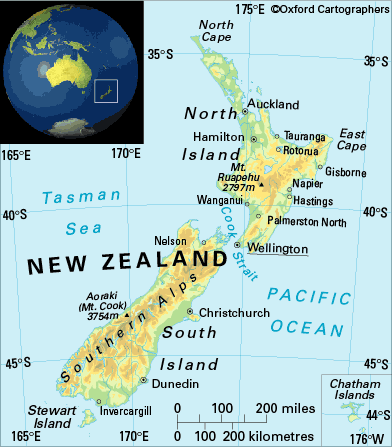
New Zealand


In recent years, it seems there has been sort of an intrigue with up and coming New Zealand musicians like last year’s Kimbra, and this year’s (and my new obsession) Lorde. So it was only fitting for me to begin the semester focused on this interesting country.

The number of well known New Zealand artist in the US is kind of surprising. Everyone’s favorite ‘80s pop band, Crowded House, originated from the country, and The Naked and Famous (who had a hit with “Young Blood” in 2010) are also natives.

The New Zealand music scene welcomes many styles including blues, jazz, pop and hip-hop, but rock music has always been a strong staple for the country’s musicians. More specifically, kiwi rock is the names used by natives to describe rock music.

Rock sprung up in New Zealand in the ‘60s with the most popular bands being The La'De'Da's and The Fourmyula. In the ‘70s, following suit with the American music scene, punk music began to influence the masses. One of the most popular New Zealand punk bands was The Enemy, which also introduced lo-fi to the music scene.

In the last 30 years, hip-hop has slowly infiltrated New Zealand popular culture. Much of the country’s hip-hop music has been consistently politically charged and nationalistic, but in recent years, it has become more lyrical and friendly. One of the first hip-hop artists to achieve international fame was Savage, which featured the American musician Akon on an album that sold over 1.8 million copies in the US in 2005.

Other than popular musical styles, other aspects of New Zealand’s musical culture have become widespread, such as the country's many famous opera singers including Simon O’Neill and Anna Leese.


One of the most well known and popular theatre performances was also originated by a New Zealander. The Rocky Horror Show musical was written by Richard O’Brien, a native of the country, and it was first performed in London in 1973.


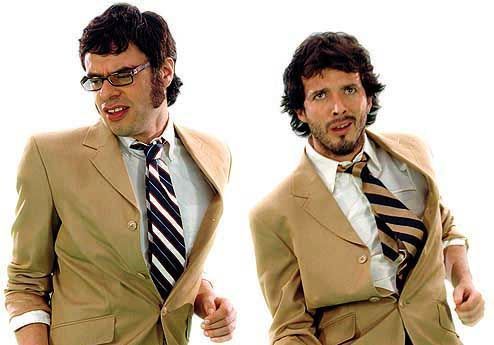
Flight of the Conchords

The comedic folk duo from New Zealand have made it big since they debuted with a television show on HBO in 2007.

The group is made up of Bret McKenzie and Jemaine Clement, who both studied film and theatre until they formed their band in 1998. Before the creation of their television show, Flight of the Conchords, the duo held a radio series for BBC Radio 2.

The radio series for McKenzie and Clement was sort of a precursor for the television series, not ironically holding the same title as the band. The show features the two men trying to find success in New York City using both dry and goofy humor in their music, which helps tell the story of their day-to-day lives.


Other than having a popular show on television, completion of  a successful tour and a string of albums, Flight of the Conchords have many other achievements under their belts.  For example, the duo has been nominated for multiple Emmys and was ranked the number 2 new television show by Time after their debut in 2007.

Friday, April 19, 2013

South Africa

A Western Influence

The music of South Africa has changed and adapted over the years, bringing influence from other countries to create its own cultural identity in music. Beginning in the 17th century, South Africans began using Western-influenced instruments such as the ramkie, a guitar-like instrument, and the mamokhorong, a one-stringed violin.

Cape Town in South Africa was considered the melting pot of many different cultures and influences. A carnival that still is popular today runs in Cape Town yearly, and it features many different musical forms. In the early carnival days, Western-style music was popular, and after British domination in the early 1800s, South Africans would march the streets in British military style playing marching tunes.

Also around this time, South African missionary music became popular, starting a gospel movement. This type of music was drawn from church hymns and spiritual chants. Choirs and a capella groups became very prominent during this time as well. 

This a capella style did not come and go with the gospel movement, however. Music in South Africa today relies heavily on vocal music sans instrumentals. 


In the early 20th century, new styles of music began to spring up. Marabi was a style of music that relied on the keyboard and resembled American ragtime and blues styles, which were also becoming popular overseas.  This music form developed into South African-style jazz over the years, making it one of the most popular music forms in the country and adding to its distinct musical style.

By the second half of the 20th Century, music in South Africa was beginning to develop a distinct blend of sound. By this time, South Africans embraced yet another style of music that was classified as part of the black urban culture. The "African stomp" became a very popular musical style, along with the use of more and more percussion instruments.

Unfortunately, this black urban style of music was short-lived, and in the late 1950s, new styles of jazz sprung up, such as the Western style of bebop. 

In the '60s and '70s, South Africa faced years of severe repression, and music was the only thing that some had to turn to. Many South African jazz musicians were forced into exile during this time. Yet African jazz bands grew increasingly popular among the country's people. 


In the later decades of the 20th century, South Africa was introduced to other Western styles of music, as white musicians began coming over to share their styles. In the '60s, acid rock bands began spreading their hippiness, the '70s welcomed boy bands and the '80s introduced punk and alternative rock. And finally, in the 1990s, South Africa was introduced to the ever-growing genre of pop. 

Today, South Africa enjoys an eclectic blend of traditional African jazz music and more Western styles of pop, rock and electronic.

Mandoza

The South African musician Mandoza is known for kwaito, a South African style of music that is very similar to the Western style of house music. It can also be compared to garage music or electronic hip-hop. 

As a young adult, Mandoza's talents were first realized by Arthur Mafokate, otherwise known as the King of Kwaito. The artist and his band, Chiskop, was first aired on the Durban Youth Radio by DJ Sipho Mbatha.

Chiskop signed a record contract and released two albums, Klaimer and Zonke Bonke, gaining them national recognition and popularity among the music scene. Mandoza, however, broke away from the band to start a solo career. 

His first album in 1999, 9115 Zola South, was widely popular and earned Mandoza a 2000 FNB South African Music Awards Best Newcomer nomination. Through the years, the singer has released many other albums, gaining him even greater popularity and notoriety in the kwaito music scene. 

Mandoza sings solely in South Africa's many languages, switching it up between English, Afrikaans, Zulu and Xhosa. Although kwaito music is typically dance and electronic oriented, its lyrics are not lacking in depth. Mandoza, however, is known for introducing an atypical style of kwaito music that focuses more on sending an inspirational message to South African people.

Friday, April 12, 2013

Egypt


Music of the Pharaoh

Egypt is another country that finds its musical identity in blending sounds from other countries. Most Egyptian music comes from the early Indian musical styles and other African countries.

The majority of Egyptian instruments are stringed or woodwind such as the kemengah, which is similar to the viola and the nay which resembles a flute. One of the more popular instruments is called the rabab, which has a deep and monotonous sound, and it is often accompanied with the reciting of poems and romances.

One of the most identifiable forms of Egyptian music is singing and chanting in unison on top of a backdrop of diverse percussion instrumentals.


Western classical music was introduced to Egypt in the 19th century along with more modern instruments like the piano and violin. Opera also became a popular form of art and entertainment. 

Other than traditional folk music, Egypt also deems religious music as very important. Coptic music is a popular Egyptian style of music of the Coptic Church. The music is comprised of chanting hymns accompanied by cymbals.

In the early 20th century, Egypt was introduced to recorded music, and in 1909, the first record label, His Master’s Voice, was created. Shortly after, the gramophone became popular for listening to music. In the next decades, Egyptian music evolved with both Arabic and Western influence.

Egyptian music today is comprised of many different musical elements, including rock, techno and Top 40 pop music. However, many Egyptians still hold true to traditional music styles which are still performed live and broadcasted on the radios.

Amr Diab

The most renowned musician in Egypt, Amr Diab is also the best-selling Arab musical artist of all time. The singer and composer is most known for his el-geel pop music, which is an Egyption form of pop music that borrows elements from Western rock ‘n’ roll and pop music. The genre also combines elements of dance music and reggae. 

Diab is very popular both in his country and around the world. He was awarded the World Music Award three times along with many other different awards for various reasons. In addition to Arabic music, Diab is also known as the Father of Mediterranean Music, having created his own genre of music dubbed “Mediterranean Sound,” which mixes elements of Egyptian and Western sounds. 

Diab’s music career began in the mid-eighties with his album Ya Tareeq. The singer gained quick recognition and especially became popular for his Mediterranean/Arabic music, which mixed Western sounds with traditional Arabic sounds, a style that was new in the music world.

In addition to his music, Diab is also well known for his pop-star image. He is considered by many as being “rebellious” with his more fashionable hairstyles and clothing. The singer had a brief film career in the early ‘90s, but he has more recently focused solely on his music.

The musician also introduced music videos to the Egypt music scene, appearing in his own videos and collaborating with renowned music video directors from the Middle East. One of the most popular videos is 2007’s “Ne'oul Aih,” which was successfully broadcasted on Egyptian television. 

Friday, March 29, 2013

Greece

Greek (Music) Life

Popular music in Greece began in the 19th century with Athenian serenades. These songs were like musicals, where performers would perform comedic, tragic or satirical opera-style songs on stage. In the 1930s, the Greek music scene began to borrow Western styles of music and combine them with the Athenian serenades.

The tango, waltz and foxtrot made their way into the Greek music culture, and musician Giorgos Mouzakis brought in some jazz elements with the trumpet and saxophone.

Rebetiko was a musical form developed in the early 1900s during the Greco-Turkish war. The style was originally associated with the lower class and urban outcasts. Greeks who were scorned by society would get together and sing of prison, violence and drugs.

The musical form was popularized when musically educated Greeks began experimenting with the sounds. By the 1940s, Rebetiko was a mainstream music genre and was popularized further by musicians such as Vassilis Tsitsanis and Marika Ninou.


By the middle of the century, the popularity of Rebetiko had hit its peak, and it was replaced with Éntekhno, which means "art song." The genre mixes orchestral elements with traditional Greek music and folk sounds. With growing popularity, Éntekhno made its way into mainstream music culture and was used extensively in popular films.

Finally, Laïkó is one other well known Greek music form. This genre stays further away from Western styles and maintains Greek lyrics and and has a more traditional sound.


Today, Éntekhno and Laïkó are still two of the most common musical genres in Greece. Pop music associated with Western culture has only recently gained popularity in the country. Many of the traditional musicians will incorporate these contemporary sounds, but still maintain a sense of traditional Greek flair.

Nikos Mihas


This alternative rock musician is one of the more popular Greek stars of the decade. Nikos Mihas is known for combining traditional Éntekhno sounds with Western pop sounds to create his brand of music.

Much of Mihas' music is largely electronic and percussion-based. In addition to being a talented singer and songwriter, Mihas is a talented guitarist and plays throughout his performances.

Mihas' career began in 2004 when he decided to enter the talent show Fame Story 2, which was a popular Greek television show on ANT1. After making it to the finals, Mihas was eliminated, but he still made history by being the first talent show musician to perform an original song.

The following year, Mihas released his first album, Sti Hora Tou Pote (Into Neverland), which produced a number of hit singles and launched Mihas into Greek popularity. His second album, Trehei Tipota?, was released in 2007. The album had a bit more pop influence than his first, and it received mixed reviews.

Although Mihas has had an extended break between albums, the musician is working to release a third album this year.